Teeth whitening is a popular cosmetic dental treatment, but many people with sensitive teeth are understandably cautious about it. Sensitivity often happens when enamel is thin, gums have receded, or tiny cracks let outside triggers reach the inside of the tooth. Whitening products use peroxide to break down stains, which can sometimes make teeth feel more sensitive for a short time. The main concern is whether whitening can be done safely if you already have sensitivity. From my experience, whitening can be safe for sensitive teeth if it is done carefully, tailored to your needs, and supervised by a dentist. At Smile League Dental, we always start with a thorough evaluation, because whitening without knowing the cause of sensitivity can make things worse instead of better.
How Teeth Whitening Agents Affect Sensitive Teeth
Before I recommend whitening, I check enamel thickness, gum health, any dental work, and what is causing the sensitivity. If sensitivity is due to cavities, cracked teeth, or gum disease, those issues should be treated first. If your teeth are otherwise healthy, professional whitening can be adjusted in strength, time, and how it is applied to help reduce discomfort. The American Dental Association has found that whitening done by a dentist is safe for teeth and gums when used as directed, though some short-term sensitivity can happen. For people with sensitive teeth, using lower-strength gels, shorter sessions, and desensitizing products can help lower the risk. As Dr. Morolayo Oluyemi (DMD MPH BDS) often says, whitening should be tailored to each person, especially for those who already feel discomfort from hot, cold, or pressure.
Professional Whitening Versus Over-The-Counter Products
Another important distinction is the difference between professional whitening and over-the-counter products. Whitening strips, pens, and kits marketed directly to consumers. It’s also important to know the difference between professional whitening and over-the-counter products. Whitening strips, pens, and kits you buy at the store often don’t have the safety features needed for sensitive teeth.
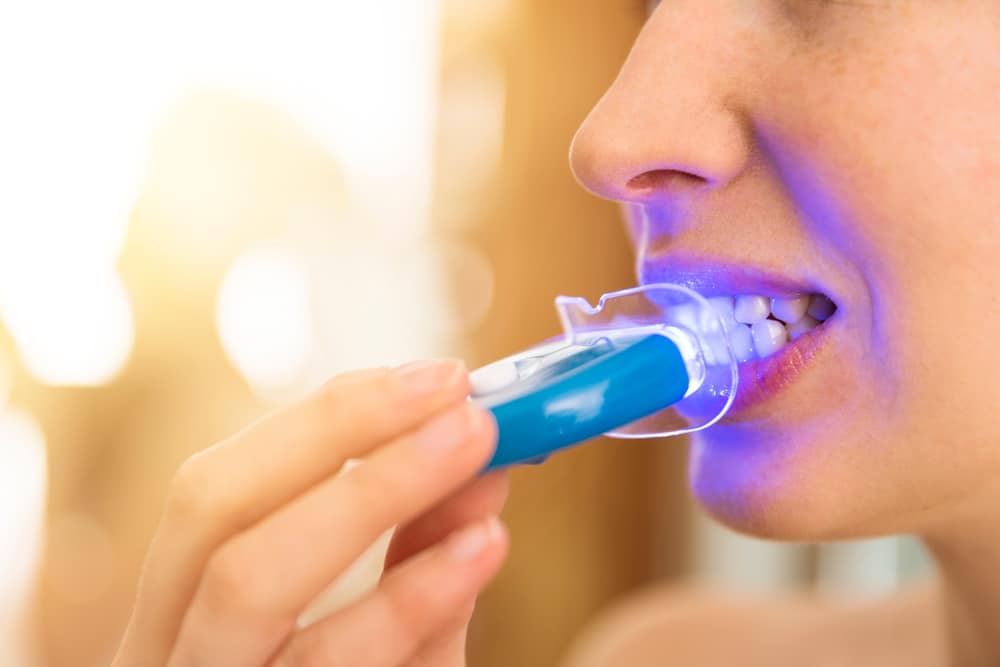
These products are made for everyone, so they can’t adjust to your specific enamel or gum shape. Uneven gel contact, leaving the product on too long, or using it incorrectly can irritate your gums and make sensitivity worse. With dentist-supervised whitening, you get custom trays, the right amount of whitening agent, and options like potassium nitrate or fluoride to help calm your teeth.
Research in the Journal of the American Dental Association shows that any sensitivity from whitening is usually temporary and goes away after treatment, especially when you follow professional guidelines. That’s why Dr. Morolayo Oluyemi (DMD MPH BDS) recommends a personalized approach instead of using store-bought products. Patients with sensitive teeth benefit from spacing out whitening sessions, using sensitivity-focused toothpaste, and avoiding acidic foods during treatment periods.
When whitening is done conservatively and monitored, it does not weaken enamel or increase cavity risk. The goal is controlled cosmetic improvement without compromising comfort or oral health. At Smile League Dental, patient education is central to that balance, and Dr. Morolayo Oluyemi (DMD MPH BDS) ensures that whitening decisions are based on both science and individual tolerance, not trends or marketing claims.
Frequently Asked Questions About Teeth Whitening And Sensitivity
Can Teeth Whitening Make Sensitive Teeth Worse?
Yes, whitening can temporarily increase sensitivity, but when done correctly, it does not cause permanent damage. Professional oversight greatly reduces the risk.
Are There Whitening Options Designed For Sensitive Teeth?
Yes. Lower-concentration gels, shorter sessions, and desensitizing treatments are commonly used for patients with sensitivity.
Should I Avoid Whitening If I Already Have Sensitivity?
Not necessarily. The cause of sensitivity should be evaluated first. If teeth are healthy, whitening can often be done safely with modifications.
How Long Does Whitening Sensitivity Usually Last?
Most sensitivity resolves within a few days after treatment ends. Persistent discomfort should be evaluated by a dentist.
Is Professional Whitening Safer Than Over-The-Counter Products?
Yes. Professional whitening allows customization and monitoring that store-bought products cannot provide.
Schedule Your Dental Exam With Smile League Dental
If you’re thinking about whitening but worried about sensitivity, getting a personalized evaluation is important. Smile League Dental at 3587 Hennepin Dr, Joliet, IL 60431, offers careful, evidence-based cosmetic care that’s tailored to you. Contact the Joliet dentists at Smile League Dental at 815-782-6243 to schedule your consultation with Dr. Morolayo Oluyemi (DMD, MPH, BDS).
At-home whitening kits have become widely available, with many promising dramatic results in just a few days. While these products can lighten surface stains, they rarely achieve the same level of whitening or safety as a professionally administered treatment. Professional whitening, performed under the supervision of a qualified dentist such as Dr. Morolayo Oluyemi (DMD MPH BDS) at Smile League Dental, uses higher concentrations of bleaching agents that are carefully regulated and tailored to the patient’s unique oral health needs.
Over-the-counter kits must comply with strict limitations on peroxide concentration for consumer safety, often making them less effective for deep or stubborn stains. Additionally, at-home trays and strips are not custom-fitted, which can lead to uneven results, gum irritation, and, in some cases, enamel sensitivity due to bleaching agents contacting areas they shouldn’t. The process is further complicated by the fact that many patients are unaware of underlying oral health issues, such as cavities or gum recession, that can be worsened by unsupervised whitening. Professional whitening sessions address these concerns first, ensuring that the whitening process is both effective and safe.
Why Professional Whitening Delivers Superior Results
The difference is not only in concentration but also in technique and precision. At Smile League Dental, whitening treatments are performed with careful isolation of the gums and soft tissues to prevent irritation. Custom trays are designed to ensure even coverage, while light activation or controlled application accelerates the whitening process and produces longer-lasting results. Clinical studies show that dentist-supervised whitening produces more consistent shade improvement compared to over-the-counter methods. Furthermore, professional whitening addresses intrinsic stains, the discoloration embedded within the tooth structure, that at-home kits generally cannot reach. Patients also benefit from follow-up care and whitening maintenance plans that extend the brightness for months or even years, something no single store-bought kit can guarantee.
The Hidden Costs And Risks Of At-Home Whitening
As Dr. Morolayo Oluyemi often emphasizes to patients, whitening is both a cosmetic and a health-related decision. Without proper evaluation and professional oversight, the risk of uneven results, increased sensitivity, and long-term enamel damage increases significantly. While at-home kits may seem convenient or less expensive, their limitations often mean repeated purchases, inconsistent shade improvement, and ultimately, a greater investment of time and money compared to a single professionally administered whitening session.
Frequently Asked Questions About Professional Whitening
Are At-Home Whitening Kits Safe For Everyone?
Not necessarily. Individuals with untreated cavities, gum disease, or enamel erosion risk worsening these conditions with at-home bleaching. A professional evaluation ensures whitening is performed safely.
Why Do Professional Treatments Last Longer?
Professional whitening penetrates deeper into the enamel to remove intrinsic stains, producing results that can last months or years with proper maintenance, unlike most at-home kits that primarily target surface stains.
Is Professional Whitening Worth The Higher Cost?
Yes. While the initial cost is higher, the results are more dramatic, longer-lasting, and safer, often eliminating the need for frequent re-whitening.
Can Over-The-Counter Kits Cause Tooth Sensitivity?
Yes. Ill-fitting trays or high peroxide exposure to the gums can cause significant discomfort. Professional treatments minimize this risk through customized application.
How White Can Professional Whitening Make My Teeth?
Results vary depending on the original shade and type of stains, but professional treatments generally lighten teeth several shades more than at-home kits can achieve.
Call Smile League Dental Today For Professional Whitening That Lasts
If you want a brighter, healthier smile, trust the team at Smile League Dental, led by Dr. Morolayo Oluyemi (DMD MPH BDS), to provide safe and effective whitening with long-lasting results. Contact the Joliet dentists at Smile League Dental at 815-782-6243 to schedule your consultation, and discover the difference professional care can make.
Having a bright, white smile often translates to confidence. It also means good oral hygiene. If you currently lack this, then we recommend “teeth whitening.” In this case, you can seek in-clinic treatment. Alternatively, you can opt for DIY teeth whitening.
Understand that both options have their strengths & weaknesses. We recommend weighing both options. This allows you to choose the ideal method. Let’s dive into how both options compare, including how to choose the better one.
DIY teeth whitening
Today, DIY teeth whitening kits are readily available out there. They are available as Over-the-counter (OTC) strips. Some are also available in the form of gels. Home remedies, such as activated charcoal or baking soda, are also available.
Pros
You’ll love DIY teeth whitening for a few reasons. First, it’s generally inexpensive. Besides, the process is convenient.
Cons
However, understand that this home remedy may not give the desired results. This is especially true if the whitening strips fail to cover the teeth evenly. It may also fail to deliver the level of safety that comes with in-clinic treatments.
In-clinic teeth whitening
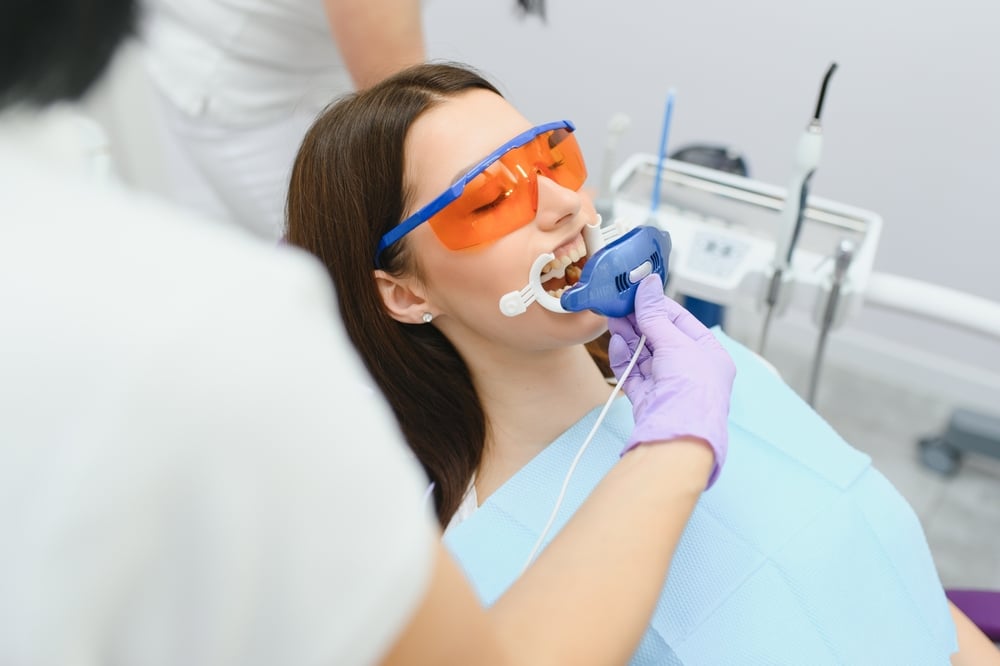
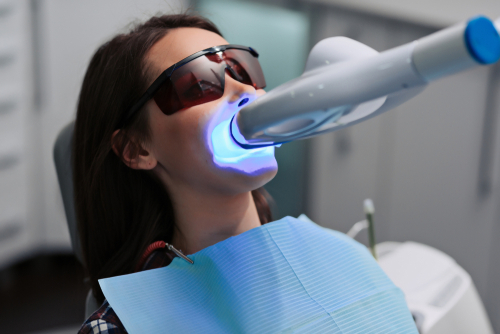
Like DIY teeth whitening, in-clinic treatment certainly has its pros and cons. It’s often performed in a dental clinic by professionals. For instance, experts at Smile League Dental perform this service using advanced LED light-accelerated technology. In addition, the system also uses 25% hydrogen peroxide formulation.
The good thing about in-office teeth whitening is that you’ll start seeing results in fewer minutes. The working procedure involves:
●First, the dentist ensures the chemical doesn’t spill on your tissues.
●After that, hydrogen peroxide is applied to the surface of the teeth. This substance helps to remove colored substances.
●Furthermore, the Zoom LED light is positioned to focus on the teeth surface. This increases the penetration of the hydrogen peroxide to the deeper tissues.
●To reduce sensitivity, the specialist also applies desensitizing gel.
●Lastly, the dentists provide custom-made guards. They also provide guidance on how to continue the procedure at home for better whitening results.
Why choose in-office treatment?
We strongly recommend choosing in-clinic treatment over DIY teeth whitening. Here’s why:
●In-clinic treatment is strongly recommended because it allows you to benefit from the expertise and supervision of a professional dentist. Before the procedure begins, the dentist assesses your oral health. This allows them to create a custom treatment that aligns with your specific needs.
●In-office treatment is worth it because it involves the use of high-quality equipment and products. These products won’t only remove tougher stains. They are also safe for use.
●Speaking of safety, in-office treatments are performed in a. Controlled environment. Interestingly, this environment complies with strict hygiene standards. Furthermore, dentists at Smile League Dental put safety measures in place to ensure the procedure doesn’t affect your soft tissues.
●Lastly, we recommend in-clinic treatments because they come with long-lasting results. Techniques used by top dentists ensure deeper penetration into the teeth’ enamel for effective and lasting results.
However, understand that in-clinic treatment also has its issues. One of them is that it’s more expensive than DIY teeth whitening. It may be inconvenient because it requires you to visit a reliable clinic, such as Smile League Dental.
Which option is best?
Overall, we recommend choosing in-clinic treatment over home remedies. In-office treatment offers quick, safe, and dramatic results.
We don’t recommend DIY teeth whitening. However, if you must try it, you should only consider the approach for mild teeth discoloration. It won’t give you the desired results if you have stubborn stains. Visit Smile League Dental today for your teeth whitening solution in Joliet, IL.
Teeth whitening is popular among many individuals who wish for a brighter smile. However, not everyone can afford the sometimes high cost of this cosmetic procedure out-of-pocket. If you’re a resident of Illinois and are covered by Medicaid, you might be wondering: Does Medicaid cover teeth whitening?
Dental Coverage Under Medicaid in Illinois
Medicaid is a state and federally-funded program that provides health insurance to eligible individuals and families. It is managed at the state level, which means that each state has some flexibility in determining what services are covered under their Medicaid program. Illinois has one of the best Medicaid coverage programs in the country. Illinois Medicaid coverage typically includes essential dental services, such as:
Preventive care
This may encompass routine check-ups, cleanings, and X-rays. Preventive care reduces your risk of developing serious dental problems like tooth decay and gum disease.
Restorative services
These include procedures like fillings, root canals, and extractions.
Emergency care
Medicaid can cover treatment for dental emergencies.
Oral surgery
Certain oral surgeries may be covered, particularly when medically necessary.
Cosmetic Dentistry and Medicaid
While Medicaid in Illinois prioritizes essential dental services to maintain and restore oral health, it does not generally cover cosmetic dentistry procedures like teeth whitening. Medicaid programs across different states typically adhere to this same principle, prioritizing necessary and medically required dental services over cosmetic treatments. As such, if you’re seeking teeth whitening or other cosmetic procedures, you may find that Medicaid will not cover the cost.
Alternative Options
If you are interested in teeth whitening but are not covered by Medicaid for this cosmetic procedure, don’t be discouraged. There are alternative options to explore.
Dental Insurance
Some dental insurance plans may offer coverage for cosmetic procedures, including teeth whitening, though it’s less common than other types of coverage. Check with your dental insurance provider to understand the specific provisions of your plan.
Flexible Spending Account (FSA) or Health Savings Account (HSA)
If you have an FSA or HSA, you can use pre-tax dollars to pay for teeth whitening, potentially reducing your out-of-pocket expenses.
Dental Savings Plans
Dental savings plans are discount plans that provide reduced rates on various dental treatments, including teeth whitening. This kind of plan can help make cosmetic dentistry more affordable where dental insurance falls short.
Consult Your Dentist
If you are considering teeth whitening and have concerns about the cost, it’s a good idea to consult with your dentist. They can provide you with information on the various teeth whitening options available, including the most appropriate treatments for your needs and budget.
At Smile League Dental, we are proud to provide the best teeth-whitening services in Joliet. Our knowledgeable and experienced team is happy to give you guidance and recommendations to help you achieve whiter teeth within your budget and in the most effective and safe manner. We can help you figure out what procedures are included in your Medicaid coverage or assist you in navigating your dental insurance plan. Give us a call today at 815-782-6243.
Your best options for teeth whitening in Joliet are going to be unique to your situation. That said, we would recommend that you use professional whitening services. They’re the safest, most effective options.
If you need a Joliet dentist, consider Smile League Dental. We always welcome new patients, and we will work with you to set up an appointment that fits your needs.
DIY Methods
You would expect a dentist to recommend professional whitening — and we do. In this case, it’s more than just self-promotion. Professional services are safer and deliver better faster results.
Your dentist should also be able to provide a greater level of customization and control over the level of whiteness. Just let us know ahead of time, and we can prepare accordingly. It’s also usually possible to get a tooth whitening procedure finished in one day.
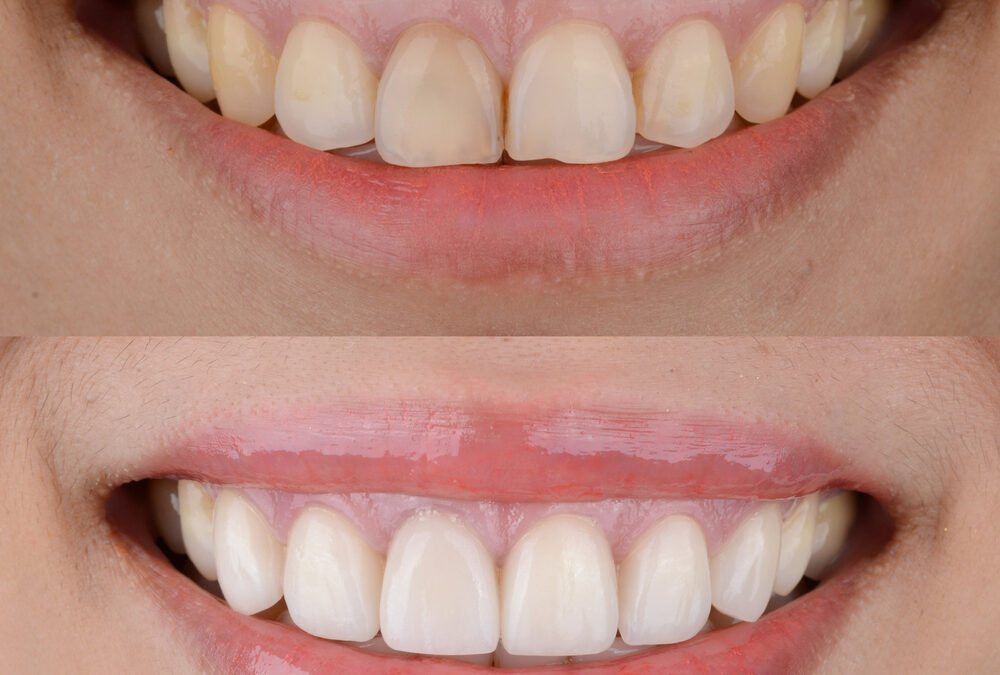
Additionally, professional whitening and stain removal services often provide relatively permanent results, providing brighter smiles for up to three years. Finally, professional whitening typically does not use abrasive products — substances that can irritate sensitive teeth and potentially cause unnecessary wear.
Dentist-Recommended Products
When dentists recommend at-home whitening products, it’s usually to maintain brightness after professional whitening. For example, some dentists recommend whitening toothpaste or mouthwash. You might also get a touch-up kit to use after an appointment.
We would always recommend getting a professional opinion, even if you’re sure you want to go with a DIY approach. There are a lot of options out there, and your dentist can help you choose the most effective one for your specific goals. Make sure to discuss this with your dentist well ahead of time —many at-home techniques require multiple applications.
Professional Whitening Services
There are many different types of professional whitening. Here is an example of the process from start to finish:
You come in for your appointment and get your teeth cleaned.
After cleaning, the dentist protects your gums and lips.
The whitening compound is applied carefully to your teeth and activated with UV lamps.
The dentist rinses the whitening bleach off of your teeth, checks the brightness, and repeats the bleaching process until you get the result you want.
You leave the office and avoid foods and, for the next day or so, avoid drinks that would stain your teeth.
The process does not take long at all. You should see results immediately, and they should last for a long time with minimal maintenance.
Maintaining White Teeth
If you want bright white teeth for something like a wedding or a photo shoot, then you will want to maintain the time between your procedure and the event. This means avoiding foods and drinks that might stain your teeth, such as turmeric, coffee, tea, red wine, cola, or berries.
Other than that, brushing and flossing regularly after meals should be all of the regular maintenance you need to enjoy a brighter smile. Of course, you should also come in for regular cleanings. Feel free to reach out and schedule an appointment with us today.
 Mon to Thur 9am- 6pm and Friday 9am- 8pm; Saturday 9am-3pm.


 smileleaguedental@gmail.com


Recent Comments