 Mon to Thur 9am- 6pm and Friday 9am- 8pm; Saturday 9am-3pm.


 smileleaguedental@gmail.com

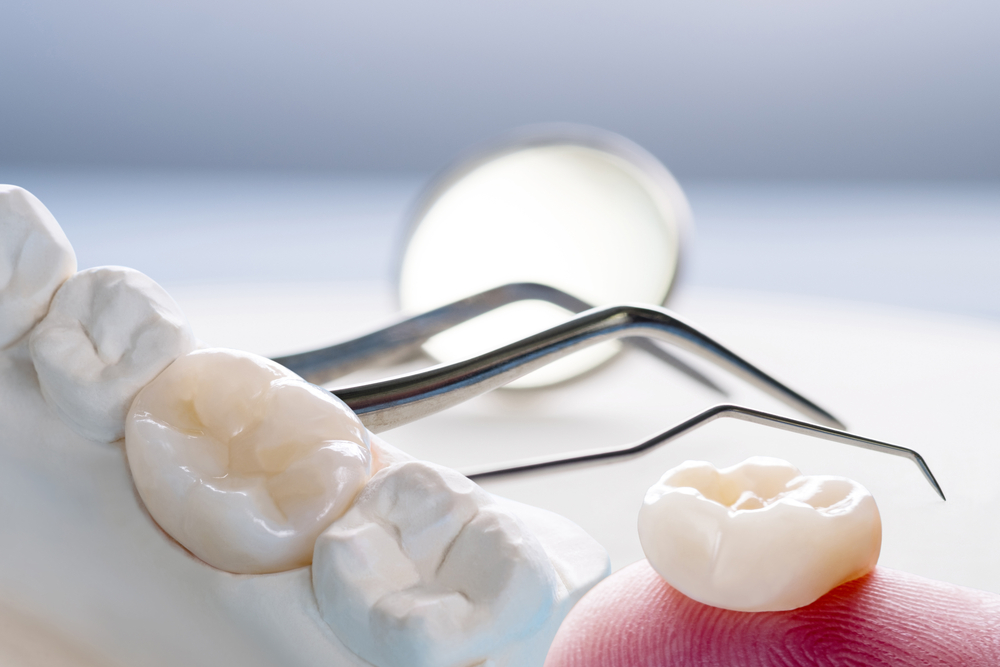
A dental crown is a custom-made cap that covers and protects a tooth that has been weakened, cracked, worn down, heavily filled, or treated with a root canal. At Smile League Dental in Joliet, I believe it’s important for patients to know why a crown is needed before starting treatment. When you understand the process, you’re likely to feel more at ease. A crown does more than improve appearance. It restores the tooth’s shape, strength, bite, and function when a filling isn’t enough. The American Dental Association says crowns can strengthen teeth with large fillings, protect weak teeth, restore broken teeth, attach bridges, and cover dental implants.
When you come to Smile League Dental, we start with a thorough evaluation. Dr. Morolayo Oluyemi (DMD MPH BDS) will check your tooth, ask about your symptoms, look at your bite, and decide if a crown is the right choice. Sometimes, we take an X-ray to see the root, surrounding bone, any previous dental work, or signs of infection. If a crown can save your tooth, we aim to keep as much of your healthy tooth as possible while making sure the crown will be strong and secure.
Why A Dental Crown May Be Recommended
A crown is often suggested when a tooth doesn’t have enough structure left for a regular filling. This can happen after deep decay, a crack, several dental treatments, or a large old filling that has weakened the tooth. Crowns are also common after root canal treatment, since those teeth can be more likely to break, especially in the back of the mouth where chewing is stronger.
Crowns can also fix teeth that are badly worn from grinding, repair broken teeth, improve the shape of some teeth, or cover a dental implant. The Cleveland Clinic describes a dental crown as a tooth-shaped cap that restores a decayed, broken, weak, or worn-down tooth. Crowns can be made from porcelain, resin, metal, or ceramic.
What Happens At The First Crown Appointment
At your first crown appointment, we numb the tooth to keep you comfortable. We remove the damaged or weak parts and shape the tooth so the crown will fit well. This step is done carefully to make sure the crown has enough space to fit securely and won’t feel bulky or affect your bite.
Once the tooth is ready, we take an impression or a digital scan. This helps us design a crown that matches your tooth and fits with your bite. The Canadian Dental Association says the usual crown process includes numbing the area, preparing the tooth, taking an impression, and making a custom crown that fits your tooth and the nearby teeth.
Often, we place a temporary crown while your final crown is being made. The temporary crown protects your tooth, keeps the space open, and lets you chew gently until the permanent crown is ready. While you have a temporary crown, avoid sticky foods, hard foods, and chewing too much on that side.
What Happens When The Final Crown Is Placed
At your second visit, we remove the temporary crown and try in the final one. Dr. Morolayo Oluyemi (DMD MPH BDS) will check how it fits, how it touches nearby teeth, your bite, and how it looks. This is important because a crown that doesn’t fit well can cause discomfort or problems later on.
Once the fit is correct, the crown is bonded or cemented in place. Your bite may be checked again after placement. Some patients feel comfortable right away, while others need a short adjustment period. Mild sensitivity can happen after crown treatment, especially if the tooth was already irritated or the preparation was deep. Sensitivity that worsens, lingers, or causes pain when biting should be evaluated.
How To Care For A New Dental Crown
A crown protects the visible part of the tooth, but the natural tooth structure underneath still needs care. Decay can form near the crown margin if plaque is not removed well. Good brushing, daily flossing, regular dental cleanings, and attention to gum health are essential.
You should avoid using crowned teeth to open packages, bite fingernails, chew ice, or crack hard objects. If you grind or clench your teeth, a nightguard may help protect the crown and surrounding teeth. Crowns are durable, but they are not indestructible. With proper care, many crowns last for years, although longevity depends on oral hygiene, bite forces, crown material, diet, and regular dental visits.
When To Call The Dentist After A Crown Procedure
Call the dental office if your temporary crown comes off, your bite feels uneven, you have sharp pain when chewing, the gums around the crown become swollen, or sensitivity does not improve. Small adjustments can often solve early discomfort. Waiting too long can allow irritation, leakage, or bite trauma to become worse.
At Smile League Dental, the purpose of crown treatment is not only to repair one tooth. It is to restore function in a way that supports your overall oral health. Dr. Morolayo Oluyemi (DMD MPH BDS) and the dental team take time to explain the procedure, answer questions, and help patients feel prepared before treatment begins.
Call Smile League Dental In Joliet For Dental Crown Care
If you have a cracked, worn, broken, or heavily filled tooth, a dental crown may help restore strength, comfort, and appearance. Smile League Dental provides thoughtful crown evaluations and restorative dental care for patients in Joliet and nearby communities. Call our Joliet dentist at Smile League Dental at 815-782-6243 to set up your consultation with Dr. Morolayo Oluyemi (DMD, MPH, BDS). Our team can help you understand whether a crown is appropriate and what to expect before treatment begins.

Recent Comments