Seeing blood when you floss can be unsettling, but it does not usually mean that flossing itself is bad for your gums. In many cases, bleeding occurs because plaque has accumulated along the gumline and between the teeth, causing inflammation known as gingivitis. Inflamed gum tissue has increased sensitivity and tends to bleed more easily when disturbed by floss or a toothbrush.
The National Institute of Dental and Craniofacial Research identifies red, swollen, easily bleeding gums as common signs of gingivitis caused by plaque buildup. At Smile League Dental in Joliet, Dr. Morolayo Oluyemi (DMD MPH BDS) evaluates bleeding gums in the context of your entire periodontal health rather than treating the bleeding as an isolated symptom. The important question is not simply whether your gums bleed, but why they are bleeding and whether the problem is improving or becoming persistent.
Occasional bleeding can also occur when someone begins flossing again after a long period of inconsistent interdental cleaning. Plaque that has remained between the teeth can irritate the surrounding tissue, and newly resumed flossing makes that inflammation more noticeable. With careful daily cleaning, plaque-related gingivitis can often improve, and bleeding may decrease as the gums become healthier.
However, bleeding that continues despite good oral hygiene can indicate tartar buildup, periodontitis, an overly aggressive flossing technique, or another dental or medical factor. The American Dental Association notes that cleaning between the teeth helps remove plaque from surfaces that toothbrush bristles cannot effectively reach. Rather than stopping flossing because you see blood, it is usually more useful to determine what is causing the tissue to bleed.
Plaque And Gingivitis Are Common Causes
Plaque is a bacterial biofilm that continually forms on teeth. When it remains along the gumline, the body’s inflammatory response can cause the gums to become red, swollen, tender, and prone to bleeding.
Gingivitis is the earliest form of periodontal disease. At this stage, inflammation affects the gum tissue but has not yet caused the supporting bone loss associated with periodontitis. According to the National Institute of Dental and Craniofacial Research, plaque-related early gum disease can often be reversed with effective brushing, interdental cleaning, and appropriate professional dental care.
Tartar Cannot Be Flossed Away
Plaque that remains on the teeth can mineralize and become calculus, commonly called tartar. Once this occurs, neither brushing nor flossing can remove the hardened deposit effectively.
Tartar creates a rough surface where additional plaque can accumulate and can contribute to continuing gum inflammation. Professional dental instruments are necessary to remove it. If your flossing technique is good but your gums continue bleeding, accumulated tartar may be one reason the inflammation is not resolving.
Your Flossing Technique Also Matters
Healthy interdental cleaning should not involve repeatedly snapping floss into the gum tissue. Forceful flossing can create small injuries and make an otherwise manageable problem worse.
I recommend easing the floss between the teeth, curving it around the side of one tooth in a C-shape, and gently moving it below the gum margin and back upward. Repeat the movement against the neighboring tooth before removing the floss. The goal is to clean the surfaces of the teeth, not to saw aggressively into the gums.
The American Dental Association also recognizes other interdental cleaning methods, including interdental brushes and water flossers. The most appropriate method can depend on your tooth spacing, restorations, dexterity, and periodontal condition.
When Bleeding May Signal Periodontitis
Persistent bleeding becomes more concerning when it occurs with other periodontal changes. Periodontitis is a more advanced inflammatory disease that can damage the tissues and bone supporting the teeth.
Warning signs may include gum recession, persistent bad breath, loose or shifting teeth, sensitivity, discomfort while chewing, or changes in the way your teeth fit together. The American Academy of Periodontology lists bleeding during brushing or flossing among the recognized warning signs of periodontal disease.
Dr. Morolayo Oluyemi (DMD MPH BDS) can examine the gums, measure periodontal pocket depths, evaluate bleeding patterns, assess tartar accumulation, and use dental radiographs when appropriate to look for supporting bone loss. Those findings help distinguish mild gingivitis from more significant periodontal disease.
Other Factors Can Contribute To Bleeding Gums
Not every episode of gum bleeding is caused solely by plaque. Hormonal changes, particularly during pregnancy, may increase the gums’ inflammatory response. Certain medications can also make bleeding more noticeable, especially medications that affect blood clotting.
Localized bleeding around one tooth may point to a different issue, such as trapped food, a defective restoration, dental decay, or irritation in that particular area. Smoking, diabetes, genetics, and certain health conditions are also associated with periodontal disease risk. A dental examination allows these factors to be considered together instead of assuming that all bleeding has the same cause.
Should You Keep Flossing If Your Gums Bleed?
For most people with plaque-related inflammation, stopping interdental cleaning is counterproductive. Leaving plaque undisturbed between the teeth can allow inflammation to continue.
Use a gentle technique and clean between your teeth consistently. If you recently resumed flossing, mild bleeding may improve as the gums become healthier. If it remains persistent, becomes substantial, or occurs with swelling, recession, pain, bad breath, loose teeth, or pus around the gums, schedule a dental examination rather than simply waiting for it to disappear.
Schedule A Gum Evaluation At Smile League Dental In Joliet
Bleeding gums are common, but persistent bleeding deserves an explanation. What appears to be a simple flossing problem may reflect gingivitis, tartar accumulation, periodontal disease, improper flossing technique, or a localized dental concern. Identifying the cause early gives you an opportunity to address inflammation before more serious periodontal damage develops.
At Smile League Dental, Dr. Morolayo Oluyemi (DMD MPH BDS) can evaluate your gum health, review your home-care routine, and determine whether professional cleaning or additional periodontal treatment may be appropriate.
Call Smile League Dental To Schedule A Dental Cleaning & Exam
If your gums regularly bleed when you floss or brush, schedule an evaluation at Smile League Dental, 3587 Hennepin Dr, Joliet, IL 60431. A careful periodontal examination can determine whether the bleeding reflects temporary inflammation or a condition requiring treatment.
Feeling embarrassed about your smile can affect more than photographs. You may find yourself covering your mouth when you laugh, avoiding close conversations, smiling differently at work, or becoming increasingly aware of one tooth every time you look in a mirror. Dental concerns that seem highly noticeable to you may range from staining and uneven edges to missing teeth, spacing, worn enamel, old dental work, or changes in the gums. The first step should not be assuming that you need extensive cosmetic dentistry. At Smile League Dental in Joliet, I believe the better starting point is understanding exactly what bothers you, determining whether there is an underlying oral health issue, and then discussing appropriate options without pressure.
Many patients are also hesitant to schedule an appointment because they feel embarrassed about the current condition of their teeth. That concern should never prevent you from receiving care. Dentists routinely see people who have postponed treatment, experienced dental anxiety, dealt with medical or financial difficulties, or simply reached a point where they are ready to improve their oral health. Dr. Morolayo Oluyemi (DMD MPH BDS) approaches these conversations by first listening to what the patient wants to change rather than assuming what an attractive smile should look like. The objective is not to create somebody else’s smile. It is to determine what can reasonably improve your own smile while protecting the health and structure of your teeth.
Start By Identifying What Is Actually Bothering You
“I don’t like my smile” can mean very different things from one patient to another. One person may dislike the color of the teeth, while another may be concerned about a chipped front tooth, uneven spacing, a missing tooth, visible gum recession, or restorations that no longer match surrounding teeth.
A dental examination allows me to separate cosmetic concerns from conditions that may also require treatment. For example, discoloration can be superficial, but a darkened individual tooth may have a different cause. A tooth that looks unusually short may actually have been worn down by grinding. Gum recession may change the appearance of a smile while also exposing sensitive root surfaces.
That distinction matters because treatment should address the cause rather than simply cover the appearance.
Make Oral Health The Foundation Of Any Smile Improvement
Before recommending cosmetic treatment, I want to know that the teeth and gums are healthy enough to support it. Tooth decay, periodontal disease, damaged restorations, and other active problems may need to be addressed first.
The National Institute of Dental and Craniofacial Research notes that periodontal disease affects the tissues supporting the teeth and can eventually contribute to tooth mobility and tooth loss when it progresses. Improving the appearance of teeth without treating active disease would not provide a sound foundation for long-term dental care.
This is one reason Dr. Morolayo Oluyemi (DMD MPH BDS) evaluates your overall oral health along with your cosmetic concerns. A smile should not merely look better immediately after treatment. Any proposed improvement should make sense in the context of your teeth, gums, bite, existing restorations, and long-term dental needs.
Teeth Whitening May Help With Certain Types Of Discoloration
If tooth color is your primary concern, professional whitening may be worth discussing. Whitening is not appropriate for every type of discoloration, and existing crowns, veneers, fillings, and other tooth-colored restorations do not respond to whitening agents in the same way natural teeth do.
The American Dental Association explains that whitening treatments may be provided in a dental office, supplied by a dentist for home use, or purchased over the counter. The ADA also notes that whitening affects natural teeth rather than existing tooth-colored restorations.
For that reason, I evaluate your current restorations and the source of the discoloration before recommending treatment. This can help avoid a result in which natural teeth become lighter while visible dental work remains a different shade.
Bonding And Veneers Can Address Specific Cosmetic Concerns
Minor chips, irregular tooth shape, certain spaces, and some discoloration may sometimes be improved with tooth-colored bonding. Bonding uses restorative material that can be shaped and matched to surrounding teeth, and it can be relatively conservative in selected cases.
Veneers are another option for certain cosmetic concerns. The ADA’s MouthHealthy resource on veneers explains that veneers are custom-made coverings placed over the front surfaces of teeth and may be used to address teeth that are chipped, stained, misshapen, or affected by certain gaps.
Veneers require a more significant commitment than whitening and many bonding procedures. Depending on the type of veneer and preparation required, treatment may be irreversible. I therefore discuss benefits, limitations, maintenance, alternatives, and how much natural tooth structure may be affected before recommending them.
Missing Or Damaged Teeth May Require Restorative Treatment
Sometimes embarrassment about a smile is connected to a dental problem that affects both appearance and function. A severely damaged tooth, missing tooth, failing crown, or large visible restoration may call for restorative rather than purely cosmetic treatment.
Depending on the condition of the mouth, options can include tooth-colored restorations, crowns, bridges, implants, or other treatment. The correct choice depends on factors such as remaining tooth structure, gum and bone health, bite forces, neighboring teeth, and the patient’s overall health.
A treatment that looks attractive but does not function properly is not a successful result. Appearance, comfort, durability, cleansability, and function should be considered together.
You Do Not Have To Change Everything At Once
Patients sometimes arrive believing that improving their smile requires treating every visible tooth. Often, it does not.
A conservative plan may involve addressing the one or two issues that bother you most. For one patient, that could mean whitening. For another, repairing a chipped front tooth may make the most meaningful difference. Someone else may benefit from replacing an older restoration that has become noticeable.
I prefer to establish priorities with you rather than automatically recommending the largest treatment plan. Changes can sometimes be completed in stages based on clinical need, personal priorities, timing, and budget.
A Dental Consultation Should Be A Conversation, Not A Judgment
Dental embarrassment can make people postpone care for years. The longer they wait, the more embarrassed they may become, creating a cycle that makes scheduling an appointment increasingly difficult.
At Smile League Dental, the purpose of an evaluation is to understand your concerns and determine what is clinically appropriate. Dr. Morolayo Oluyemi (DMD MPH BDS) can discuss what can realistically be changed, what should be treated for health reasons, what may be left alone, and what options fit your goals.
Good oral health also has value beyond appearance. The National Institute of Dental and Craniofacial Research notes that oral health is important for eating, speaking, overall health, and appearance, which can influence self-esteem.
You do not need a perfect smile to have a healthy or attractive one. The goal should be a result that feels appropriate for you and is supported by sound dental care.
Talk With Smile League Dental About Your Smile
If you are uncomfortable with the appearance of your teeth, you do not need to determine the solution before making an appointment. A dental examination can identify what is causing the concern, determine whether oral health issues need attention, and clarify which cosmetic or restorative options may be appropriate.
Smile League Dental is located at 3587 Hennepin Dr, Joliet, IL 60431. Whether you are concerned about discoloration, chipped or worn teeth, spacing, old dental work, missing teeth, or simply want to understand what could reasonably improve your smile, the first step can be a thoughtful conversation about your goals.
To schedule an appointment, the Joliet dentist at Smile League Dental at 815-782-6243 to set up your consultation with Dr. Morolayo Oluyemi (DMD, MPH, BDS). Let’s discuss your smile with a dentist who can evaluate both its appearance and its underlying health.
Getting older does not mean you have to lose your teeth. With good daily care and regular dental visits, your natural teeth can stay healthy for life. As we age, certain factors can make teeth and gums more at risk for problems, such as gum recession, years of use, old dental work, ongoing health issues, and medications that affect the mouth. The American Dental Association lists dry mouth, root and coronal cavities, and gum disease as common concerns for older adults. At Smile League Dental, I believe that knowing about these changes helps you protect your teeth before small issues turn into bigger ones.
It is also important to know that not every dental change in later life is caused by aging alone. For example, while dry mouth is more common in older adults, the National Institute of Dental and Craniofacial Research says it is not a normal part of aging. Medications, health problems, changes in hand strength, past dental issues, and years of wear often play a bigger role in oral health problems. Teeth with fillings, crowns, or other repairs also need to be checked as they get older. Dr. Morolayo Oluyemi (DMD MPH BDS) looks at all these factors instead of assuming dental problems are just a part of getting older.
Gum Recession Can Expose More Vulnerable Tooth Surfaces
Gums can pull back over time, especially if you have gum disease, brush too hard, or have other risk factors. When gums recede, part of the tooth root is left uncovered. The root does not have the same strong enamel as the top of the tooth, so it is more likely to get cavities and feel sensitive.
This is why an older adult might suddenly feel pain from cold foods or drinks, even if the tooth has been there for years. Cavities on the root can also develop differently than those on the enamel. When I examine your mouth, I pay close attention to gum recession, exposed roots, plaque buildup, old dental work, and spots that are harder to keep clean.
Gum Disease Becomes More Important With Age
Periodontal disease is not an unavoidable result of aging, but the effects of gum disease can accumulate over many years. According to the Centers for Disease Control and Prevention, periodontal disease affects the tissues and bone that surround and support the teeth. More advanced periodontitis can involve bone loss and is an important cause of tooth loss in adults.
Bleeding gums, persistent bad breath, gum recession, changes in the way teeth fit together, or teeth that begin to feel loose deserve evaluation. Periodontal disease can sometimes progress with relatively little discomfort, which is why waiting for pain is not a reliable approach. Regular examinations allow me to monitor changes in gum measurements, inflammation, and the supporting structures around the teeth.
Dry Mouth Can Increase The Risk Of Tooth Decay
Saliva plays a protective role in oral health. It helps wash away food particles, buffers acids, supports swallowing, and contributes to the natural protection of tooth surfaces. When saliva production decreases, the risk of cavities, irritation, and certain oral infections can increase.
Older adults are often more likely to take several medications, and many medications can contribute to dry mouth. The National Institute of Dental and Craniofacial Research notes that the use of multiple medications by older adults can result in dry mouth as a side effect. The ADA also reports that patients with xerostomia may experience increased plaque, gingivitis, periodontal disease, and cavities, particularly around exposed roots and cervical areas of teeth.
If your mouth frequently feels dry, I recommend discussing the symptom rather than simply increasing your water intake and ignoring it. Identifying the possible cause can help guide a more appropriate preventive plan.
Teeth And Dental Restorations Experience Years Of Wear
Natural teeth withstand decades of chewing pressure. Grinding or clenching can add considerably more force over time. Teeth may develop flattened surfaces, small cracks, enamel wear, or changes in sensitivity, and older fillings or crowns may eventually need closer monitoring.
A restoration does not necessarily need replacement simply because it is old. I evaluate whether it remains structurally sound, seals appropriately, and continues to protect the tooth. Unnecessary replacement removes additional tooth structure, so treatment decisions should be based on clinical findings rather than age alone.
Dr. Morolayo Oluyemi (DMD MPH BDS) also looks at the entire bite when evaluating wear. A repeatedly fractured tooth, for example, may reflect more than a problem with that individual tooth. Bite forces, grinding habits, missing teeth, and surrounding restorations can all contribute.
Medical Health And Oral Health Often Intersect
Changes elsewhere in the body can influence oral health. Diabetes is one example. The National Institute of Dental and Craniofacial Research notes that people with diabetes can experience oral problems that include gum disease and dry mouth, and dry mouth itself can increase the risk of tooth decay and oral infections.
For that reason, your dental history is only part of the information I need. Current medications, medical diagnoses, recent surgeries, and changes in your health may help explain changes occurring in your mouth. Keeping your medical and dental providers informed can support safer and more coordinated care.
Good Dental Care Can Help You Keep Your Natural Teeth
Tooth loss becomes more common with age, but it should not be viewed as inevitable. The CDC identifies tooth decay and periodontal disease as major causes of adult tooth loss, and both conditions can often be prevented or controlled with appropriate care.
Daily brushing with fluoride toothpaste, cleaning between the teeth, managing dry mouth when present, avoiding tobacco, and keeping appropriate dental appointments remain important throughout adulthood. Your specific schedule should reflect your oral health rather than your birthday. Someone with active periodontal disease, extensive restorations, or significant dry mouth may need a different preventive plan than someone with stable teeth and gums.
Protect Your Teeth And Gums At Smile League Dental In Joliet
Aging changes the conditions in which your teeth and gums must function, but it does not mean dental decline is unavoidable. Recognizing gum recession, dry mouth, periodontal disease, worn dental work, and changing health risks early can give us more options for preserving comfortable function and maintaining natural teeth.
At Smile League Dental, Dr. Morolayo Oluyemi (DMD MPH BDS) provides dental care with attention to both current oral health and the factors that may affect it over time. If you have noticed increased sensitivity, dry mouth, bleeding gums, changes in your bite, or concerns about aging dental work, a thorough examination can help determine what deserves attention.
Losing a tooth can affect how you chew, speak, smile, and care for the teeth nearby. At Smile League Dental in Joilet, I want you to know that replacing a tooth is about more than just looks. The right treatment should protect your bite, support your oral health, and match the condition of your remaining teeth and bone. Both dental bridges and dental implants can replace missing teeth, but they work in different ways. Dr. Morolayo Oluyemi (DMD MPH BDS) recommends starting with a thorough exam, clear imaging, and an open conversation about long-term care.
When you lose a tooth, the nearby teeth can start to shift, the tooth above or below may move, and chewing pressure can become uneven. Over time, this might change your bite, trap food, irritate your gums, wear down teeth, and make cleaning harder. A fixed dental bridge fills the gap by using the teeth next to the space or implants for support. A dental implant replaces the missing tooth root with a small post in the jawbone, which then holds a crown, bridge, or denture after it heals. The American Dental Association explains that bridges use artificial teeth attached to nearby teeth, while implants can support crowns, bridges, or dentures depending on how many teeth are missing.
How A Dental Bridge Replaces A Missing Tooth
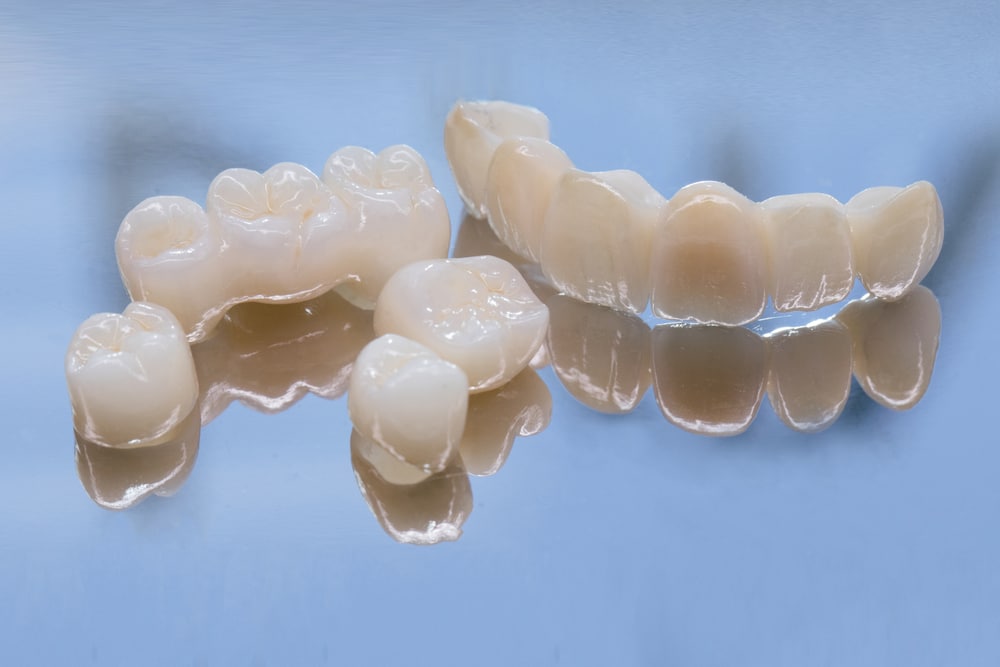
A traditional dental bridge usually puts crowns on the teeth next to the missing one. These crowned teeth hold an artificial tooth in the middle, called a pontic. This option works well if the neighboring teeth already need crowns or have large fillings. It can also be a good choice if you want to avoid surgery or prefer a fixed solution that is often finished faster than an implant. If those teeth are healthy and untouched, preparing them for crowns may remove tooth structure that would otherwise remain intact. A bridge also requires careful cleaning under the pontic, because food and plaque can collect beneath it. Cleveland Clinic explains that dental bridges can restore chewing function, improve appearance, and support oral health, but they rely on crowns and artificial teeth to span the missing space.
How A Dental Implant Replaces A Missing Tooth
A dental implant works differently because it replaces the root of the missing tooth. Once the implant is placed and has healed, it can hold a crown without needing support from the teeth next to it. This is especially useful if the teeth on either side are healthy. Implants can also support bigger restorations if you are missing several teeth.
Getting an implant usually takes longer than getting a bridge because the bone needs time to heal around the implant before the final tooth is added. Some people may also need bone grafting first. Mayo Clinic says dental implant surgery can involve several steps, and risks may include infection, injury to nearby areas, sinus issues, or nerve injury, depending on your situation.
Which Is Better For Your Mouth?
There is no one-size-fits-all answer. A bridge might be best if the teeth next to the gap are already weak or need crowns. An implant could be better if the nearby teeth are healthy and there is enough bone. Bridges are often quicker and may cost less at first. Implants can help keep your natural teeth intact and may last longer if you are a good candidate and keep up with oral hygiene.
At Smile League Dental, I also look at your bite force, gum health, bone levels, smile line, medical history, smoking habits, diabetes control, teeth grinding, medication history, and how well you can clean the restoration. Dr. Morolayo Oluyemi (DMD MPH BDS) never recommends treatment based only on looks. Planning is different for a front tooth, a back molar, a single missing tooth, or several missing teeth.
What Patients Should Ask Before Choosing
Before you decide between a bridge and an implant, ask what will happen to the teeth next to the gap. Find out if there is already bone loss. Ask how you will need to clean the restoration, how long the treatment will take, and what kind of maintenance is needed. Also, ask what your options are if the restoration fails in the future.
A good treatment plan should explain both the benefits and what you need to do to keep your mouth healthy. Bridges require floss threaders, special brushes, or water flossing to clean around and under the pontic. Implants need healthy gums, great hygiene, and regular dental checkups. Neither option will last without proper care. The goal is not just to fill the gap, but to restore function in a way that is healthy, easy to clean, and right for your mouth.
Call Smile League Dental In Joliet
If you are comparing dental bridges and dental implants, Smile League Dental can help you make a careful and informed decision. Dr. Morolayo Oluyemi (DMD MPH BDS) evaluates the condition of your teeth, gums, bone, and bite before recommending a treatment plan. The goal is to replace missing teeth with a result that feels comfortable, looks natural, and supports long-term oral health.
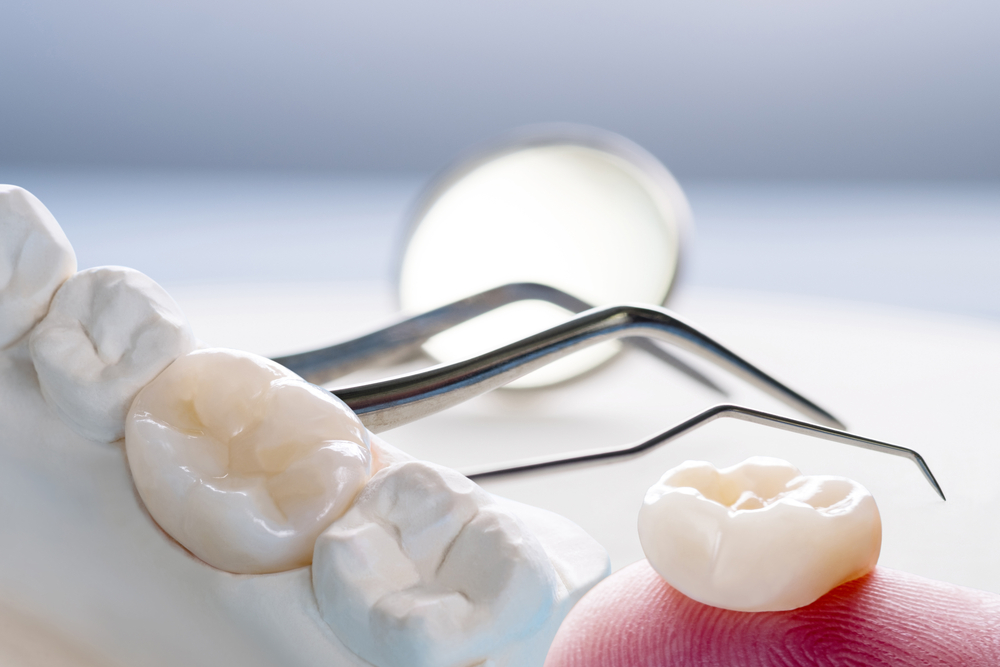
A dental crown is a custom-made cap that covers and protects a tooth that has been weakened, cracked, worn down, heavily filled, or treated with a root canal. At Smile League Dental in Joliet, I believe it’s important for patients to know why a crown is needed before starting treatment. When you understand the process, you’re likely to feel more at ease. A crown does more than improve appearance. It restores the tooth’s shape, strength, bite, and function when a filling isn’t enough. The American Dental Association says crowns can strengthen teeth with large fillings, protect weak teeth, restore broken teeth, attach bridges, and cover dental implants.
When you come to Smile League Dental, we start with a thorough evaluation. Dr. Morolayo Oluyemi (DMD MPH BDS) will check your tooth, ask about your symptoms, look at your bite, and decide if a crown is the right choice. Sometimes, we take an X-ray to see the root, surrounding bone, any previous dental work, or signs of infection. If a crown can save your tooth, we aim to keep as much of your healthy tooth as possible while making sure the crown will be strong and secure.
Why A Dental Crown May Be Recommended
A crown is often suggested when a tooth doesn’t have enough structure left for a regular filling. This can happen after deep decay, a crack, several dental treatments, or a large old filling that has weakened the tooth. Crowns are also common after root canal treatment, since those teeth can be more likely to break, especially in the back of the mouth where chewing is stronger.
Crowns can also fix teeth that are badly worn from grinding, repair broken teeth, improve the shape of some teeth, or cover a dental implant. The Cleveland Clinic describes a dental crown as a tooth-shaped cap that restores a decayed, broken, weak, or worn-down tooth. Crowns can be made from porcelain, resin, metal, or ceramic.
What Happens At The First Crown Appointment
At your first crown appointment, we numb the tooth to keep you comfortable. We remove the damaged or weak parts and shape the tooth so the crown will fit well. This step is done carefully to make sure the crown has enough space to fit securely and won’t feel bulky or affect your bite.
Once the tooth is ready, we take an impression or a digital scan. This helps us design a crown that matches your tooth and fits with your bite. The Canadian Dental Association says the usual crown process includes numbing the area, preparing the tooth, taking an impression, and making a custom crown that fits your tooth and the nearby teeth.
Often, we place a temporary crown while your final crown is being made. The temporary crown protects your tooth, keeps the space open, and lets you chew gently until the permanent crown is ready. While you have a temporary crown, avoid sticky foods, hard foods, and chewing too much on that side.
What Happens When The Final Crown Is Placed
At your second visit, we remove the temporary crown and try in the final one. Dr. Morolayo Oluyemi (DMD MPH BDS) will check how it fits, how it touches nearby teeth, your bite, and how it looks. This is important because a crown that doesn’t fit well can cause discomfort or problems later on.
Once the fit is correct, the crown is bonded or cemented in place. Your bite may be checked again after placement. Some patients feel comfortable right away, while others need a short adjustment period. Mild sensitivity can happen after crown treatment, especially if the tooth was already irritated or the preparation was deep. Sensitivity that worsens, lingers, or causes pain when biting should be evaluated.
How To Care For A New Dental Crown
A crown protects the visible part of the tooth, but the natural tooth structure underneath still needs care. Decay can form near the crown margin if plaque is not removed well. Good brushing, daily flossing, regular dental cleanings, and attention to gum health are essential.
You should avoid using crowned teeth to open packages, bite fingernails, chew ice, or crack hard objects. If you grind or clench your teeth, a nightguard may help protect the crown and surrounding teeth. Crowns are durable, but they are not indestructible. With proper care, many crowns last for years, although longevity depends on oral hygiene, bite forces, crown material, diet, and regular dental visits.
When To Call The Dentist After A Crown Procedure
Call the dental office if your temporary crown comes off, your bite feels uneven, you have sharp pain when chewing, the gums around the crown become swollen, or sensitivity does not improve. Small adjustments can often solve early discomfort. Waiting too long can allow irritation, leakage, or bite trauma to become worse.
At Smile League Dental, the purpose of crown treatment is not only to repair one tooth. It is to restore function in a way that supports your overall oral health. Dr. Morolayo Oluyemi (DMD MPH BDS) and the dental team take time to explain the procedure, answer questions, and help patients feel prepared before treatment begins.
Call Smile League Dental In Joliet For Dental Crown Care
If you have a cracked, worn, broken, or heavily filled tooth, a dental crown may help restore strength, comfort, and appearance. Smile League Dental provides thoughtful crown evaluations and restorative dental care for patients in Joliet and nearby communities. Call our Joliet dentist at Smile League Dental at 815-782-6243 to set up your consultation with Dr. Morolayo Oluyemi (DMD, MPH, BDS). Our team can help you understand whether a crown is appropriate and what to expect before treatment begins.
 Mon to Thur 9am- 6pm and Friday 9am- 8pm; Saturday 9am-3pm.


 smileleaguedental@gmail.com




Recent Comments