Periodontal disease, also known as gum disease, is a serious problem for many people around the world. This chronic inflammatory condition can lead to serious consequences such as tooth loss and potential systemic health problems if left untreated. What can be done to treat periodontal disease? Can it be reversed?
What Is Periodontal Disease?
When plaque builds up on the teeth, it can create a breeding ground for harmful bacteria. This bacteria releases toxins, triggering inflammation in the gums. Without intervention, this inflammation can cause the breakdown of gum tissue and supporting bone, leading to pockets forming between the teeth and gums—pockets that further promote bacterial growth and infection.
The Stages of Periodontal Disease
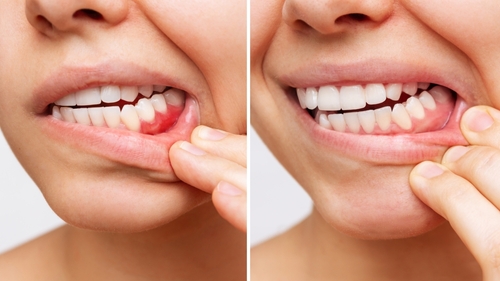
Periodontal disease advances through stages, from mild to severe. The initial stage, known as gingivitis, is characterized by red, swollen gums that might bleed during brushing or flossing. It’s important to be able to recognize the symptoms of gingivitis because, with timely action, it can often be reversed. Professional dental cleanings and improved oral hygiene at home are usually the best way to reverse this mild form of periodontal disease.
If, however, gingivitis is left untreated, it can progress to periodontitis—a more severe form of gum disease. This stage involves both inflammation and irreversible damage to the teeth’s supporting structures. Here, the prospect of full reversal becomes more complex, yet there remains potential for effective management.
Managing Periodontal Disease
While a complete reversal of advanced periodontal disease might not be guaranteed, its progression can be effectively managed using some tried-and-true strategies:
Professional Dental Care
Regular dental visits are vital. A good dentist can perform deep cleaning procedures like scaling and root planing to remove plaque and tartar below the gum line, reducing inflammation and promoting healing.
Good Oral Hygiene
A consistent oral care routine that includes brushing, flossing, and using antimicrobial mouthwash plays a significant role in managing gum disease. Ask your dentist if you’re unsure about proper techniques for your home dental care.
Lifestyle Changes
Adopting a healthier lifestyle can go a long way toward preventing or treating gum disease. Quitting smoking, maintaining a balanced diet, managing stress, and staying hydrated all positively impact oral health.
Medications
Dental professionals might prescribe medications or antimicrobial rinses to control bacterial growth and inflammation.
Surgical Interventions
In severe cases of periodontal disease, surgical options like gum grafts or bone grafting might restore damaged tissue and promote bone regeneration.
Early Intervention Is Key
When it comes to treating periodontal disease, prevention, and early intervention are paramount. Detecting and treating gum disease early significantly enhances the chances of successful management, as well as the possibility of reversing the disease. Regular dental check-ups enable your dentist to identify signs of gum disease and provide tailored guidance for effective control.
Contact Smile League Dental
Having a good dentist in your corner is critical to winning the battle against periodontal disease. At Smile League Dental, we are proud to offer our expertise and support to families throughout Joliet and the surrounding areas. Call us today to chat or book an appointment. You can reach us at 815-782-6243.
Frequently Asked Questions About Periodontal Disease
What Is Periodontal Disease?
Periodontal disease is an infection of the gums and supporting structures of the teeth. It usually begins as gingivitis, a mild form of gum inflammation, and can progress to periodontitis, where the infection damages the bone and ligaments holding the teeth in place.
The primary cause of periodontal disease is plaque, a sticky biofilm of bacteria that naturally forms on teeth. If plaque is not removed daily, it hardens into tartar (calculus), which irritates the gums and allows bacteria to thrive.
At Smile League Dental in Joliet, we believe that timely tooth replacement is a critical step in preserving your oral health, appearance, and long-term functionality. I’m Dr. Morolayo Oluyemi (DMD, MPH, BDS), and I’ve seen the cascade of dental issues that can follow when a missing tooth goes unaddressed. Even a single gap can trigger changes in how you bite, chew, and speak—and over time lead to changes in your jawbone structure, alignment of remaining teeth, and facial aesthetics. That’s why we strongly recommend discussing replacement options soon after extraction, rather than postponing treatment and risking complications.
When a tooth is removed, the surrounding bone and gum tissue begin to reshape and adapt. Over time, the jawbone in that area can shrink through a process called resorption, a phenomenon well documented in clinical literature. This change in bone dimension can affect your ability to place an implant later, alter your bite, shift adjacent teeth, and ultimately change the appearance of your face. At Smile League Dental (3587 Hennepin Dr, Joliet, IL 60431, phone 815-782-6243), we strive to help patients move forward with confidence by offering timely solutions after extraction.
Consider the functional impact: a missing tooth disrupts the uniform contact between upper and lower teeth, reducing chewing efficiency. Over time, surrounding teeth may drift into the empty space; the opposing tooth may over-erupt because it no longer meets resistance; and that uneven distribution of force can cause excessive wear, sensitivity, or damage to other teeth. These mechanics are explained clearly by patient-focused sources that outline how replacement preserves jaw function and alignment. Beyond functionality, aesthetics matter—especially when the gap is visible to others. Replacing missing teeth helps protect self-confidence and social comfort while also safeguarding long-term oral health.
FAQs About Tooth Replacement After Extraction
What Happens If I Don’t Replace A Missing Tooth Right Away?
Failure to replace a missing tooth can lead to shifting of adjacent teeth, over-eruption of opposing teeth, bite imbalance, increased wear on remaining teeth, and accelerated bone loss in the jaw (resorption). Once the bone shrinks significantly, subsequent replacements, such as dental implants, may require additional procedures, such as bone grafting, increasing the complexity and cost of treatment.
When Is The Best Time To Consider A Replacement After Extraction?
Ideally, replacement planning should begin soon after extraction. Many clinicians recommend evaluation within a few weeks to a few months. Early action helps maintain bone volume and simplify restorative options. Delaying for years may limit choices or require preparatory work such as ridge preservation or grafting, and can increase risk of adjacent tooth complications.
What Replacement Options Are Available?
Common paths include:
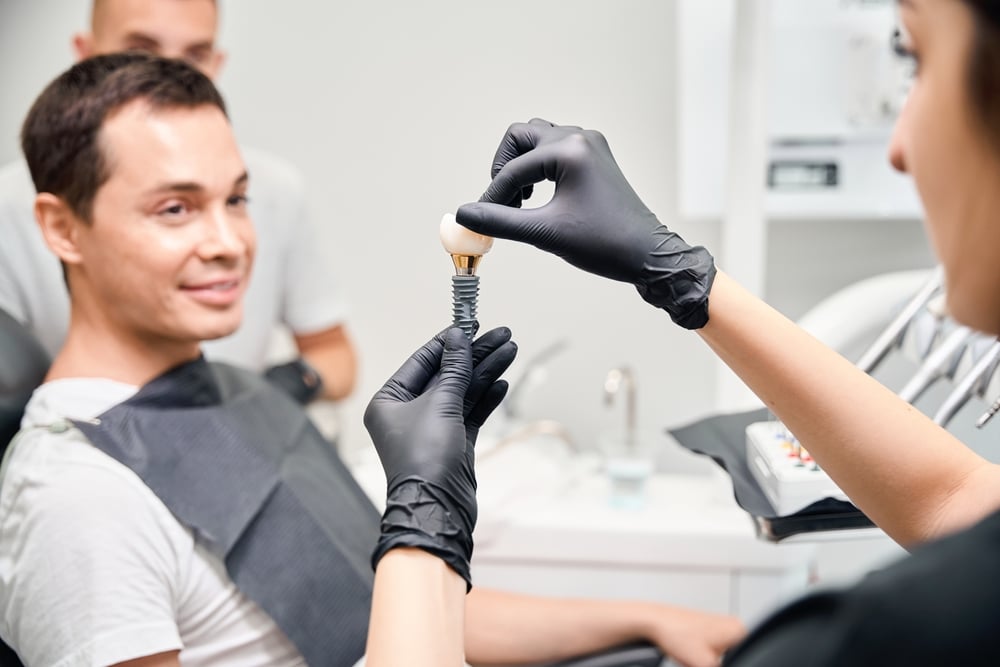
Implants: A titanium post placed in the bone acts as a root substitute and supports a crown. This is the most stable option and helps preserve the jawbone.
Bridges: A fixed prosthetic anchored on adjacent teeth spans the missing tooth site.
Dentures or partials: Removable appliances that replace one or multiple missing teeth. These can restore function but may exert pressure on remaining gums and bone over time.
At Smile League Dental, Dr. Morolayo Oluyemi reviews your bone condition, oral health, budget, and aesthetic goals to recommend the best solution for your situation.
How Does Bone Loss Affect Replacement Options?
Bone needs stimulation—normally supplied by the root of a tooth—to maintain its volume and density. Once that root is removed, the bone begins to remodel and shrink. This shrinkage may impact how secure an implant will be and how natural adjacent teeth remain in place. Replacement options such as implants are designed to restore stimulus, helping slow down or prevent further resorption. Early replacement simplifies treatment by preserving bone and reducing the need for additional grafting.
Will Replacement Improve My Ability To Chew And Speak Properly?
Yes. A missing tooth affects chewing efficiency and can interfere with the clarity of speech. For example, if you avoid certain foods or place more pressure on other teeth, you may fatigue or injure those areas. Replacing the tooth restores a full chewing surface and helps distribute forces evenly, protecting surrounding teeth and improving overall oral comfort.
Does Replacing A Missing Tooth Affect How My Face Looks Over Time?
Definitely. Missing teeth, especially in visible areas, can contribute to a sunken or collapsed appearance around the mouth and premature facial aging. Bone loss affects the vertical dimension of the face, and adjacent teeth drifting alters your smile line. Replacing missing teeth helps support your facial structure, maintain your mouth shape, and preserve your natural smile aesthetic.
How Long Should I Wait Before I Replace A Missing Tooth?
The sooner the better. While every patient is unique, waiting too long increases the risk of shifting teeth, over-eruption, bone loss, and complications that may require additional treatment. Dr. Morolayo Oluyemi will assess your condition and timeline, explaining options and sequencing so you can make an informed decision.
What Should I Do Next If I Have A Recent Extraction Or Missing Tooth?
Contact Smile League Dental to schedule a consultation at 815-782-6243. Tell our team you’re interested in discussing the replacement of a missing tooth, and we’ll plan an evaluation of your oral health, bone condition, and restoration options. Beginning soon after extraction gives you more choices and often reduces long-term complexity.
Contact Smile League Dental To Schedule A Consultation At 815-782-6243
If you have lost a tooth or are facing extraction, please contact the Joliet dentists at Smile League Dental at 815-782-6243 to schedule your consultation. Our Joliet clinic at 3587 Hennepin Dr, Joliet, IL 60431 serves patients seeking confident, high-quality care, and we are ready to help you restore both your smile and your long-term oral health.
Gaps between teeth—especially the front teeth—are common and often harmless, but many people feel self-conscious about their appearance or worry about long-term dental health. While traditional braces are a reliable way to close gaps, they are not the only option. Advances in cosmetic and restorative dentistry now offer several effective ways to fix tooth spacing without metal brackets or wires. The best solution depends on the size of the gap, the condition of your teeth, and your goals for comfort, cost, and aesthetics. Here are the most popular cosmetic dentistry methods for closing gaps without braces.
1. Clear Aligners (Invisalign and Similar Systems)
Clear aligners are one of the most widely used alternatives to braces. Brands like Invisalign, ClearCorrect, and other custom aligner systems gently move teeth into place using removable, nearly invisible plastic trays.
Advantages include:
Discreet appearance
Removability for eating and brushing
Less irritation compared to metal brackets
Gradual tooth movement without the look of braces
Clear aligners can fix mild to moderate spacing issues, though severe gaps or bite problems may still need orthodontic guidance. Treatment times vary, typically ranging from 6 to 18 months depending on the complexity.
2. Dental Bonding
Dental bonding is a fast, affordable cosmetic procedure where a dentist applies tooth-colored composite resin to the edges of the teeth to close small to medium gaps. The resin is shaped and hardened with a special light, blending seamlessly with natural enamel.
Why bonding works well:
It can often be done in a single visit
Minimal or no tooth enamel removal
Immediate results
Budget-friendly compared to veneers or aligners
Bonding is ideal for people with small gaps or slightly uneven tooth shapes. However, composite material is not as strong as porcelain, so bonding may need occasional touch-ups or replacement after several years.
3. Porcelain Veneers
Porcelain veneers are thin, custom-made shells bonded to the front surface of the teeth. They are a great option for closing gaps while also improving tooth color, shape, and alignment.
Advantages include:
Natural, long-lasting cosmetic improvement
Resistant to staining
Can correct multiple issues at once
The process typically requires two visits. A small amount of enamel may be removed to ensure proper fit, making veneers a more permanent choice and a higher-cost investment. They are best for people seeking a dramatic cosmetic transformation or who have additional concerns like discoloration or chipped teeth.
4. Dental Crowns
If gaps are caused by very small, worn-down, or damaged teeth, dental crowns may be recommended. A crown covers the entire tooth, restoring shape and appearance while also closing unwanted spaces.
Crowns are generally used when structural problems exist—not purely for cosmetic gap closure. They offer strength and long-term durability but require more tooth preparation.
5. Frenectomy (When a Lip or Tongue Tie Causes a Gap)
In some cases, a gap—especially between the two front teeth—is caused by an oversized labial frenum (the small tissue connecting the lip to the gums). A frenectomy is a simple surgical procedure that removes or reshapes this tissue.
On its own, a frenectomy may not close the gap completely, but it can prevent the gap from widening or reopening after cosmetic treatment.
Choosing the Best Option
The right way to fix gaps without braces depends on:
The size and cause of the gap
Whether you prefer removable or permanent solutions
Your budget
The condition of your enamel and gums
A consultation with a dentist or orthodontist can help determine which approach fits your goals. With modern cosmetic dentistry, closing gaps between your teeth is more accessible—and more discreet—than ever. Dr. Morolayo Oluyemi (DMD MPH BDS) evaluates each patient’s unique case to determine the most appropriate treatment, ensuring both functionality and aesthetics are considered.
Cosmetic Dentistry FAQs
How Does Dental Bonding Close Gaps Between Teeth?
Dental bonding involves applying a tooth-colored composite resin to the teeth to reshape and close small gaps. The material is hardened with a special light and polished for a natural appearance. It is a quick and painless procedure, typically completed in one visit.
Are Porcelain Veneers A Permanent Solution For Closing Gaps?
Porcelain veneers are a long-term cosmetic solution that covers the front of the teeth. Since a small amount of enamel must be removed, the process is not reversible. However, veneers are highly durable, stain-resistant, and can last 10-15 years or longer with proper care.
Can Clear Aligners Be Used For Small Gaps Instead Of Braces?
Yes, clear aligners are an excellent alternative to braces for closing small to moderate gaps. They gently shift teeth over time using custom-fitted trays. Unlike traditional braces, aligners are removable, discreet, and require fewer dental visits.
Which Treatment Option Is The Least Invasive?
Dental bonding is the least invasive procedure because it does not require enamel removal or extensive preparation. It is ideal for patients who want a quick, non-permanent solution for closing small gaps.
How Do I Know Which Treatment Is Right For Me?
Dr. Morolayo Oluyemi (DMD MPH BDS) conducts a thorough consultation and examination to assess the size of the gap, the health of surrounding teeth, and the patient’s aesthetic goals. The best option depends on factors such as tooth structure, budget, and long-term expectations.
Can Gaps Reopen After Treatment?
If teeth are not properly maintained or if there are underlying bite issues, gaps can gradually reopen. Retainers may be recommended after treatment to prevent shifting and maintain results.
Is Cosmetic Dentistry Covered By Dental Insurance?
Most cosmetic treatments, such as veneers and bonding, are considered elective procedures and are not covered by insurance. However, some plans may offer partial coverage if the procedure is deemed necessary for dental health reasons.
Are You Ready To Transform Your Smile?
If you are considering cosmetic dentistry to close gaps between your teeth, Smile League Dental can help. Dr. Morolayo Oluyemi (DMD MPH BDS) provides personalized treatment plans to achieve beautiful, natural-looking results. Contact our Joliet cosmetic dentist at Smile League Dental by calling 815-782-6243 to book your consultation at 3587 Hennepin Dr, Joliet, IL 60431, and explore your options for a confident smile.
Dental implants are often presented as a long-term or even permanent solution for missing teeth, yet the true lifespan depends on many factors. As Dr. Morolayo Oluyemi (DMD MPH BDS), I believe clarity on expectations and care is essential for patients at Smile League Dental in Joliet. When placed under proper conditions, dental implants can reliably last decades. Some recent research even documents implants still functioning after nearly 40 years. A long-term clinical review of over 10,000 implants reported survival rates at the implant level of 96.8 % after 10 years, and about 94.0 % after 15 years.
However, “lasting a lifetime” is not a guarantee. The crown (the visible tooth attached to the implant) typically undergoes more wear and may require replacement every 10 to 15 years. Many clinicians point out that the titanium post, once well-integrated into healthy bone, is far more durable than the overlying prosthesis.
In addition, a recent long-term follow-up from Sweden showed that implants placed for single-tooth restorations remained functional for several decades, supporting the possibility of multi-decade use under favorable conditions.
Overall, the expected lifespan of an implant can span from 15 to 30 years or more, with many cases extending beyond that with proper care.
Factors That Influence Dental Implant Longevity
In practice, longevity hinges on multiple variables: the patient’s oral hygiene, bone quality, medical health, implant design, occlusion (bite forces), and regular dental maintenance. Smoking, uncontrolled diabetes, or gum disease increase the risk of bone loss around the implant (peri-implantitis), thus reducing survival. A meta-analysis shows that early failures often relate to osseointegration complications, while later failures tend to result from mechanical or biological stresses.
How Design And Technique Affect Implant Success
Implant design advancements, such as microthreaded surfaces or laser-microtextured grooves, have been shown to reduce marginal bone loss and maintain stability over time. One 15-year study reported survival rates of 98.9 % for implants with microthreads, and 98.8 % for those without, indicating design plays a subtle but real role.
Another wide-scale study documented two-stage implants with a 92 % survival rate over 15 years, reinforcing that when the surgical protocol is ideal, long-term outcomes are strong.
As Dr. Oluyemi, I emphasize to my patients that even a technically perfect implant can fail without proper aftercare. Maintenance visits, professional cleaning, and regular monitoring of bone levels are non-negotiable. If any signs of inflammation, mobility, or bone loss appear, early intervention can rescue an implant before catastrophic failure.
Dental Implant Frequently Asked Questions
Can A Dental Implant Truly Last A Lifetime?
Yes, under ideal circumstances. Many implants remain functional beyond 30, 35, or even 40 years, especially when placed in healthy bone and maintained carefully. The implant fixture (the post in bone) has the best chance of longevity; the attached crown component may require replacement.
What Component Fails Most Often — Implant Or Crown?
The crown is more likely to require replacement due to normal wear and tear, cracks, or aesthetic changes. The actual implant post, when properly integrated and cared for, is less prone to mechanical failure, provided factors like bone loss or infection are avoided.
How Much Does Good Oral Hygiene Affect Longevity?
It plays a critical role. Plaque accumulation around implant margins leads to inflammation and bone loss (peri-implantitis). Patients who brush, floss, and attend regular checkups dramatically increase implant survival.
Does Bone Quality Make A Difference?
Yes. Denser bone (often found in the lower jaw) provides better initial stability. Implants placed in softer bone or areas of prior bone resorption require careful planning, possibly grafting, to achieve lasting success.
What Medical or Lifestyle Conditions Shorten the Life Expectancy Of An Implant?
Smoking, poorly controlled diabetes, osteoporosis, and periodontitis are known risk factors. These conditions impair healing, reduce bone support, and raise the chance of long-term bone loss around the implant.
If An Implant Fails, Can It Be Replaced?
In many cases, yes. After removal and adequate healing, a new implant can often be placed. Reinforcement of bone (via grafting) and careful planning are often needed to optimize chances of success.
Are There Early Vs. Late Failures?
Yes. Early failures usually occur during the healing (osseointegration) phase, typically within weeks to months post-placement. Late failures show after years and often result from biomechanical overload, bone loss, or infection.
Is There Data On Success Rates Over 20 Years?
Emerging long-term studies, including up to 40 years, show strong outcomes in many cases. Systematic reviews and longevity data consistently report survival rates above 90 % at 10 years and, in many cases, maintain high function well beyond that.
Call Smile League Dental Today
At Smile League Dental, located at 3587 Hennepin Dr, Joliet, IL 60431, I, Dr. Morolayo Oluyemi (DMD MPH BDS), aim to provide not just functional implants but solutions engineered for endurance with personalized care. Contact the Joliet dental implant dentists at Smile League Dental at 815-782-6243 to schedule your consultation, and discover the difference professional care can make. Proper planning and maintenance significantly increase the odds that your implant will remain a stable, long-lasting part of your smile.
When dental pain becomes persistent, patients often face a critical decision. Should they try to save the tooth through a root canal or remove it entirely with an extraction? Both procedures can stop infection and eliminate pain, but their long-term effects on oral health differ significantly.
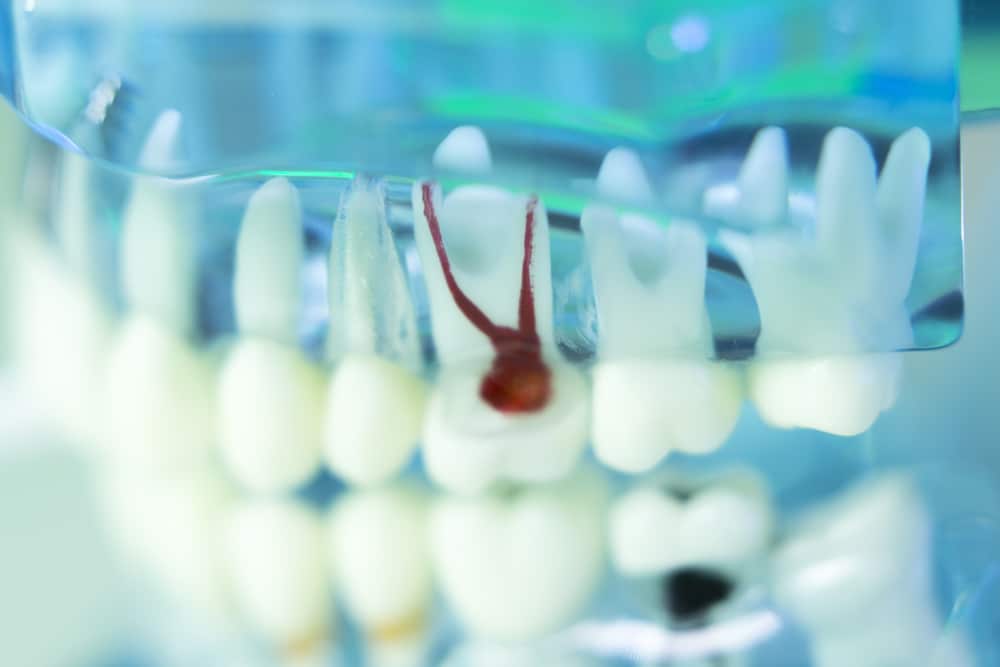
According to Dr. Morolayo Oluyemi (DMD, MPH, BDS) of Smile League Dental in Joliet, preserving natural teeth should remain the priority whenever possible. A root canal, performed under local anesthesia, involves cleaning infected pulp from within the tooth, disinfecting the canal, and sealing it with a durable filling material. This process maintains the natural tooth structure, allowing for continued function and stability. In contrast, extraction permanently removes the tooth, which can affect alignment, chewing efficiency, and bone density over time.
Comparing Root Canal Treatment And Tooth Extraction
A key advantage of a root canal lies in maintaining the integrity of the dental arch. The procedure has a high success rate and, with proper care, treated teeth can last a lifetime. However, extraction may be necessary in certain cases, such as when a tooth is fractured below the gum line, the decay is too extensive, or infection threatens surrounding bone tissue. When extraction becomes unavoidable, modern restorative options like dental implants or bridges can help restore function and aesthetics.
According to Dr. Morolayo Oluyemi, implants are often preferred after extractions because they prevent bone resorption and shifting of nearby teeth. The best choice depends on several clinical factors, including the extent of infection, periodontal health, bone density, and overall treatment goals.
Pain, Recovery, And Long-Term Outcomes
Patients often ask whether one option is more painful than the other. With advances in local anesthesia and dental technology, both procedures can be completed comfortably. Recovery from a root canal typically involves mild sensitivity for a few days, while extraction requires tissue healing over several weeks. The long-term cost of replacing an extracted tooth is generally higher than preserving one through endodontic treatment. For this reason, Dr. Morolayo Oluyemi emphasizes the importance of thorough evaluation and diagnostic imaging before making any recommendations. Preserving a natural tooth through a root canal, when clinically viable, offers superior functional, aesthetic, and health outcomes. However, in cases where restoration is not possible, extraction with an immediate replacement plan ensures continued oral stability.
Making The Right Decision For Long-Term Oral Health
Modern dentistry focuses on conservative care: maintaining as much natural structure as possible while eliminating disease. Patients benefit most when treatment decisions balance immediate relief with long-term oral health. Whether a root canal or extraction is appropriate depends on an individual’s specific dental condition and overall health status, making professional evaluation essential.
Dental Treatment Frequently Asked Questions
How Can A Dentist Determine If A Tooth Can Be Saved With A Root Canal?
A dentist evaluates radiographs, infection depth, and the condition of the surrounding bone and gums. If the infection is confined to the pulp and the tooth structure is strong, a root canal can typically save it.
Are Root Canals Safe And Effective?
Yes. When performed by a qualified professional, root canals have a success rate exceeding 90%. Proper sealing and restoration prevent reinfection, allowing the tooth to function normally for decades.
When Is Tooth Extraction The Better Option?
Extraction is preferred when decay or fracture extends below the gum line, the tooth cannot be restored, or bone loss is severe. It may also be recommended if a tooth poses a risk of spreading infection.
Can A Dental Implant Replace An Extracted Tooth?
Absolutely. A dental implant serves as an artificial root, supporting a custom crown that looks and functions like a natural tooth. Implants preserve bone density and prevent adjacent teeth from shifting.
Does Insurance Cover Root Canals Or Extractions?
Most dental insurance plans cover both, but coverage percentages may vary. Root canals are often considered restorative, while implants or bridges following extractions may fall under major procedures.
 Mon to Thur 9am- 6pm and Friday 9am- 8pm; Saturday 9am-3pm.


 smileleaguedental@gmail.com



Recent Comments