 Mon to Thur 9am- 6pm and Friday 9am- 8pm; Saturday 9am-3pm.


 smileleaguedental@gmail.com

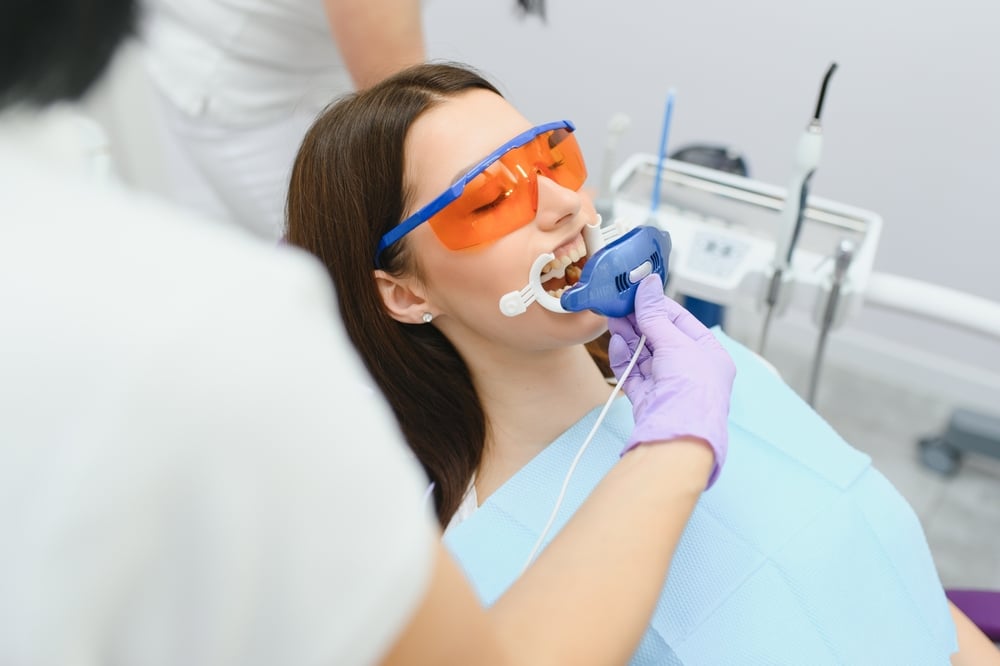
Teeth whitening is a popular cosmetic dental treatment, but many people with sensitive teeth are understandably cautious about it. Sensitivity often happens when enamel is thin, gums have receded, or tiny cracks let outside triggers reach the inside of the tooth. Whitening products use peroxide to break down stains, which can sometimes make teeth feel more sensitive for a short time. The main concern is whether whitening can be done safely if you already have sensitivity. From my experience, whitening can be safe for sensitive teeth if it is done carefully, tailored to your needs, and supervised by a dentist. At Smile League Dental, we always start with a thorough evaluation, because whitening without knowing the cause of sensitivity can make things worse instead of better.
How Teeth Whitening Agents Affect Sensitive Teeth
Before I recommend whitening, I check enamel thickness, gum health, any dental work, and what is causing the sensitivity. If sensitivity is due to cavities, cracked teeth, or gum disease, those issues should be treated first. If your teeth are otherwise healthy, professional whitening can be adjusted in strength, time, and how it is applied to help reduce discomfort. The American Dental Association has found that whitening done by a dentist is safe for teeth and gums when used as directed, though some short-term sensitivity can happen. For people with sensitive teeth, using lower-strength gels, shorter sessions, and desensitizing products can help lower the risk. As Dr. Morolayo Oluyemi (DMD MPH BDS) often says, whitening should be tailored to each person, especially for those who already feel discomfort from hot, cold, or pressure.
Professional Whitening Versus Over-The-Counter Products
Another important distinction is the difference between professional whitening and over-the-counter products. Whitening strips, pens, and kits marketed directly to consumers. It’s also important to know the difference between professional whitening and over-the-counter products. Whitening strips, pens, and kits you buy at the store often don’t have the safety features needed for sensitive teeth.
These products are made for everyone, so they can’t adjust to your specific enamel or gum shape. Uneven gel contact, leaving the product on too long, or using it incorrectly can irritate your gums and make sensitivity worse. With dentist-supervised whitening, you get custom trays, the right amount of whitening agent, and options like potassium nitrate or fluoride to help calm your teeth.
Research in the Journal of the American Dental Association shows that any sensitivity from whitening is usually temporary and goes away after treatment, especially when you follow professional guidelines. That’s why Dr. Morolayo Oluyemi (DMD MPH BDS) recommends a personalized approach instead of using store-bought products. Patients with sensitive teeth benefit from spacing out whitening sessions, using sensitivity-focused toothpaste, and avoiding acidic foods during treatment periods.
When whitening is done conservatively and monitored, it does not weaken enamel or increase cavity risk. The goal is controlled cosmetic improvement without compromising comfort or oral health. At Smile League Dental, patient education is central to that balance, and Dr. Morolayo Oluyemi (DMD MPH BDS) ensures that whitening decisions are based on both science and individual tolerance, not trends or marketing claims.
Frequently Asked Questions About Teeth Whitening And Sensitivity
Can Teeth Whitening Make Sensitive Teeth Worse?
Yes, whitening can temporarily increase sensitivity, but when done correctly, it does not cause permanent damage. Professional oversight greatly reduces the risk.
Are There Whitening Options Designed For Sensitive Teeth?
Yes. Lower-concentration gels, shorter sessions, and desensitizing treatments are commonly used for patients with sensitivity.
Should I Avoid Whitening If I Already Have Sensitivity?
Not necessarily. The cause of sensitivity should be evaluated first. If teeth are healthy, whitening can often be done safely with modifications.
How Long Does Whitening Sensitivity Usually Last?
Most sensitivity resolves within a few days after treatment ends. Persistent discomfort should be evaluated by a dentist.
Is Professional Whitening Safer Than Over-The-Counter Products?
Yes. Professional whitening allows customization and monitoring that store-bought products cannot provide.
Schedule Your Dental Exam With Smile League Dental
If you’re thinking about whitening but worried about sensitivity, getting a personalized evaluation is important. Smile League Dental at 3587 Hennepin Dr, Joliet, IL 60431, offers careful, evidence-based cosmetic care that’s tailored to you. Contact the Joliet dentists at Smile League Dental at 815-782-6243 to schedule your consultation with Dr. Morolayo Oluyemi (DMD, MPH, BDS).

Recent Comments